
Last updated November 16, 2026
 Driveway & pavers
 Kitchen remodeling
 Bathroom remodeling
 Home additions & ADU
 Roofing
 Windows & doors
 Fence
Free written scope consultation - allowances, timeline, and change-order rules on paper before a single trade is scheduled
The Complete Driveway & Pavers Guide for Garland Homeowners
Most driveway advice you’ll read online was written for ground that doesn’t move. Garland doesn’t have that ground. Much of this city sits on expansive clay soil, the kind that swells when it drinks up a wet spring and shrinks back in a dry August. A driveway built to a generic spec can look perfect at curing and start showing its first hairline cracks within a couple of seasons. This guide is about building a driveway that survives Garland’s soil and temperature swings. You’ll learn how base depth actually works here, how to choose between concrete pavers, natural stone, and permeable systems, what local HOAs expect, and how to sequence the work so it holds together.
Quick Answer
A driveway in Garland needs a deeper, better-compacted base than national guides call for, because North Texas expansive clay shifts as moisture changes. Concrete or clay pavers set on a properly compacted base with geotextile fabric generally outperform poured slabs here. The single biggest factor in how long your driveway lasts isn’t the paver surface, it’s what’s underneath it.
Styles & brands we work with
- Kitchen remodeling
- Bathroom remodeling
- Home additions & ADU
- Roofing
- Windows & doors
- Driveway & pavers
- Fence
Table of Contents
- Why Garland’s Clay Soil Changes Every Driveway Rule
- How Deep Does a Paver Base Need to Be in Garland?
- Concrete Pavers vs. Natural Stone vs. Permeable Pavers
- What Geotextile Fabric Does in Clay Conditions
- HOA Rules and Paver Styles That Pass Review
- Sequencing Your Driveway With Other Exterior Work
- What Does a Paver Driveway Cost in Garland?
- How Long Does the Job Take?
Why Garland’s Clay Soil Changes Every Driveway Rule
Garland sits on some of the most expansive clay soil in the country. Expansive clay doesn’t just get soft when it’s wet; it grows. The mineral structure of the soil draws in water and swells, pushing upward, and then contracts hard when it dries out. Over a season, ground like this can move several inches vertically. That movement is the root cause behind most cracked slabs, heaved pavers, and sunken walkways in Dallas County.
What makes this a design problem rather than a nuisance is that the movement isn’t uniform. One corner of a driveway might sit on clay that stays wet longer because of how water drains off the roof, while another sits higher and dries faster. The soil under the two ends of the same driveway moves differently. A rigid surface that doesn’t allow for that difference has nowhere to put the stress.
Then there’s the heat. Garland summers bake the top layer of soil and pull moisture out fast. Winters are mild, so you won’t be dealing with deep frost, but the wet-dry cycle through spring and summer does the real work on the ground. A driveway designed for a stable, sandy subgrade or a colder climate is being asked to do something different here. That’s why we treat the soil as the starting point of every plan, not a footnote.
What this means in practice
- Base prep matters more than paver selection. A premium paver on a shallow base fails; a standard paver on a correct base holds.
- Drainage has to be planned, not improvised. Water pooling at the edge of a driveway accelerates clay movement.
- Flexible surfaces (pavers set on a compacted aggregate base) tolerate minor movement better than a single poured slab, which cracks along its control joints and sometimes beyond them.
- Compaction is measured, not eyeballed. “Looks packed” isn’t a standard.
How Deep Does a Paver Base Need to Be in Garland?
For most residential paver driveways in Garland, plan on a compacted base of at least 6 to 8 inches – meaningfully deeper than the 4-inch base you’ll see in national how-to guides. The number is driven by clay. A shallow base on expansive soil lets the surface pavers take the movement directly, and that’s when joints open up and edges settle.
Depth alone isn’t the whole story, though. How the base is built matters just as much as how thick it is. Here’s how a properly built base goes together, in order:
- Excavate to the right depth. That means the finished paver thickness plus the base thickness plus a small margin, so the driveway sits correctly against the garage apron and the street.
- Grade for drainage first. Slope is set before any aggregate goes down. Water needs somewhere to go, away from the foundation and off the surface.
- Lay geotextile fabric over the subgrade. This is the step most shortcuts skip, and on clay it’s one of the most important (more on this below).
- Place aggregate in lifts. Base material goes down in layers, and each layer gets compacted before the next one goes on. Dumping the full depth and compacting once leaves loose pockets underneath.
- Compact with a plate or roller. A vibrating plate compactor does the work, checking density as the base comes up.
- Screen and set the bedding layer. A thin, level bedding course sits on top of the compacted base to receive the pavers.
- Install pavers and edge restraint. A rigid edge restraint locks the field in place so the pavers can’t creep outward.
- Sweep joint sand and compact again. The final pass seats the pavers and drives sand into the joints.
Ask any paver contractor in Garland how they handle base depth and compaction, and listen for specifics. If the answer is “the standard four inches,” that’s a plan designed for different ground.
Concrete Pavers vs. Natural Stone vs. Permeable Pavers
The surface material is where homeowners spend the most time deciding, and it’s worth understanding how each option behaves in Garland specifically. The right choice depends on your soil prep, your drainage plan, your HOA, and your budget. Here’s how the three main categories compare.
Concrete pavers
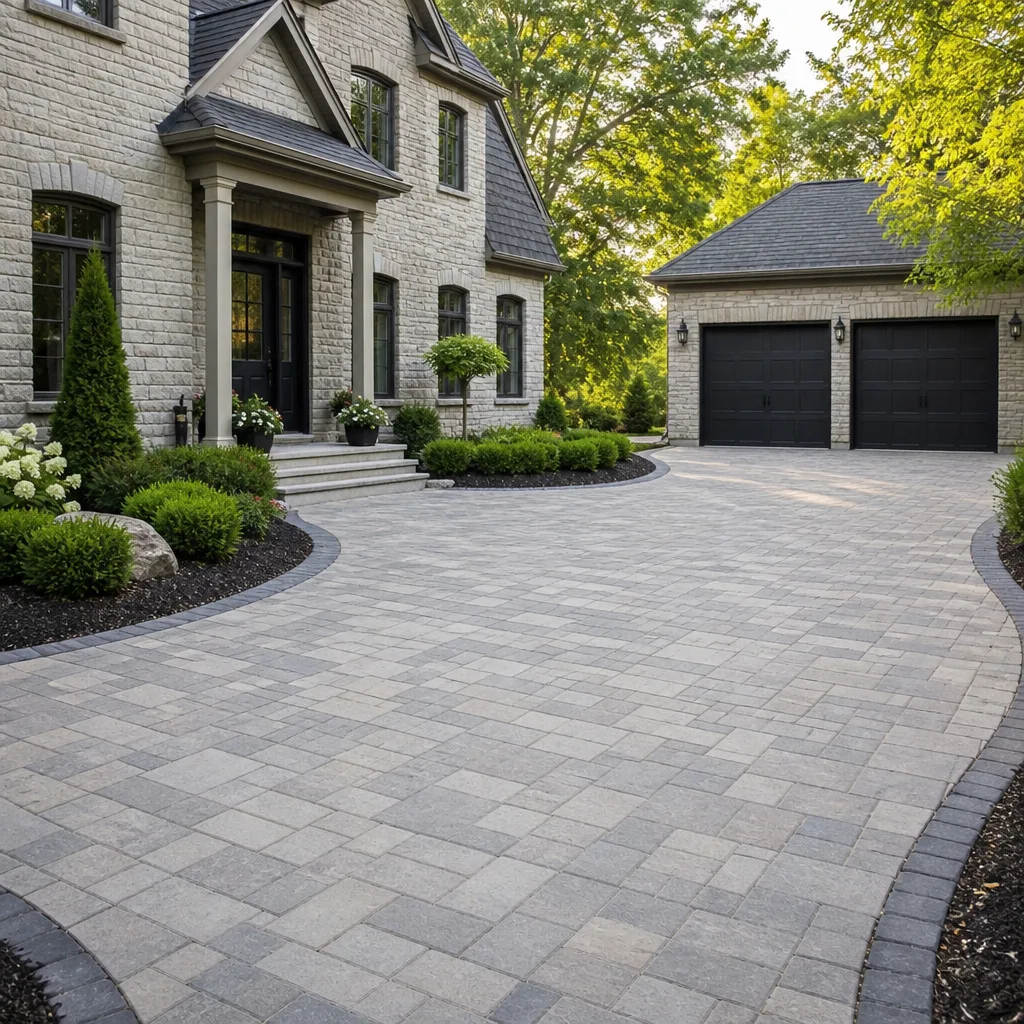
Concrete pavers are the most common driveway surface in Garland for good reason. They’re manufactured to consistent dimensions, they come in a wide range of colors and patterns, and they flex with minor ground movement instead of cracking like a poured slab. A modern interlocking concrete paver system handles the wet-dry swing well when the base is right. They’re also repairable: if one paver cracks or settles, it can be lifted and reset without tearing out the whole driveway.
The brands that anchor most concrete paver work today include Belgard, Unilock, Techo-Bloc, and Cambridge Pavers. Each carries distinct product lines, so the material choice can be driven by style and budget rather than what a single supplier happens to stock.
Natural stone
Natural stone – think travertine, bluestone, or granite setts – brings a look that manufactured pavers can approximate but not quite match. It’s a heavier material, and on clay that cuts both ways: the weight can help resistance to movement, but stone is unforgiving if the base settles unevenly underneath. Natural stone is the least tolerant of a weak base of the three options. It’s a great fit when the prep is done to spec and the budget allows for it.
Permeable pavers
Permeable pavers are engineered to let water pass through the surface into an open-graded base and then into the soil below. On clay, which drains slowly, that design needs careful attention. In Garland, permeable systems work when they’re paired with the right base profile and an outlet for water that the clay can’t absorb fast enough. Installed correctly, they reduce runoff and standing water at the driveway edge. Installed incorrectly, they hold water in the base. This is a category where the design matters as much as the product.
- Best all-around performer in Garland clay: interlocking concrete pavers on a deep, compacted base.
- Highest design ceiling: natural stone, if you’re willing to pay for correct base prep.
- Best for drainage-challenged lots: permeable pavers with an engineered outlet, not just open joints.
What Geotextile Fabric Does in Clay Conditions
Geotextile fabric is a woven or non-woven sheet laid between the native clay and the aggregate base. On clay, it does two jobs that matter for the life of a driveway. First, it acts as a separation layer, keeping fine clay particles from migrating up into the base aggregate. Second, it provides reinforcement that helps prevent the base from spreading laterally under load.
Lateral migration is a quiet failure. Under the weight of vehicles and with moisture cycling through the clay, the base material can shift sideways toward the edges of the driveway. Without a separation layer, the clay fines work their way up into the aggregate voids and the base loses its load-bearing structure. When that happens, the driveway starts to settle unevenly – often in the wheel paths first, then at the edges. Fabric won’t fix bad compaction, but on expansive clay it’s a meaningful part of keeping the base stable over time.
Signs a driveway skipped the separation layer
- Pavers feel slightly loose across wide areas rather than at a single point.
- The driveway edge is bulging outward or the pavers are creeping away from the restraint.
- Wheel-path depressions appear gradually rather than all at once.
- Water pools near the edges instead of draining.
Fabric adds material cost, not labor drama. It’s one of the least expensive insurance policies in the whole build, and one of the first things to ask about when you’re comparing quotes.
HOA Rules and Paver Styles That Pass Review
Many Garland-area neighborhoods have HOA architectural review processes, and the paver style you love might need to clear that review before work begins. Getting approval up front costs nothing but time. Starting work and then finding out the color doesn’t pass is expensive.
HOAs typically care about a handful of things:
- Color palette. Earth tones and muted grays are the safest choices. Bright reds or high-contrast multi-color patterns can draw objections in neighborhoods with a defined aesthetic.
- Material type. Concrete pavers and natural stone are usually approved; gravel, exposed aggregate, and asphalt are often restricted.
- Pattern and scale. Herringbone and running bond are familiar and typically approved. Dramatic geometric patterns may need a formal submittal.
- Edge restraint and finish. Visible edging and clean transitions to turf and walkways factor into review.
- Consistency with the house. Your brick, roof color, and trim all influence what the committee sees as a match.
The practical advice: pull your HOA documents before you pick a paver. Many Garland communities have a design guideline on file that lists approved materials and colors. If yours is silent on driveways, a short written description with a sample photo usually gets a decision. Bring the HOA into the process early rather than at the end.
Sequencing Your Driveway With Other Exterior Work
A driveway is rarely the only exterior project on the list. Walkways, edging, drainage correction, and fence work often get planned around the same time. The order you do the work in affects both cost and how the finished result holds together. Get the sequence right and you avoid tearing up finished surfaces for an adjacent job.
A sensible sequence for a combined exterior refresh looks like this:
- Start with drainage. If the lot needs a French drain, a channel drain, or regrading to move water away from the foundation, that happens before any hardscape goes down. Drainage changes grade, and grade changes driveway slope.
- Do the driveway and hardscape base work next. This is where the deep excavation, geotextile, and compaction happen – ideally scheduled alongside walkway and patio work so the base can be built in one continuous effort.
- Install pavers on the driveway and walkways together. This keeps the color and pattern consistent and lets the crews share the same compaction equipment and a single delivery of material.
- Set edging and restraints. These lock in the whole installed footprint.
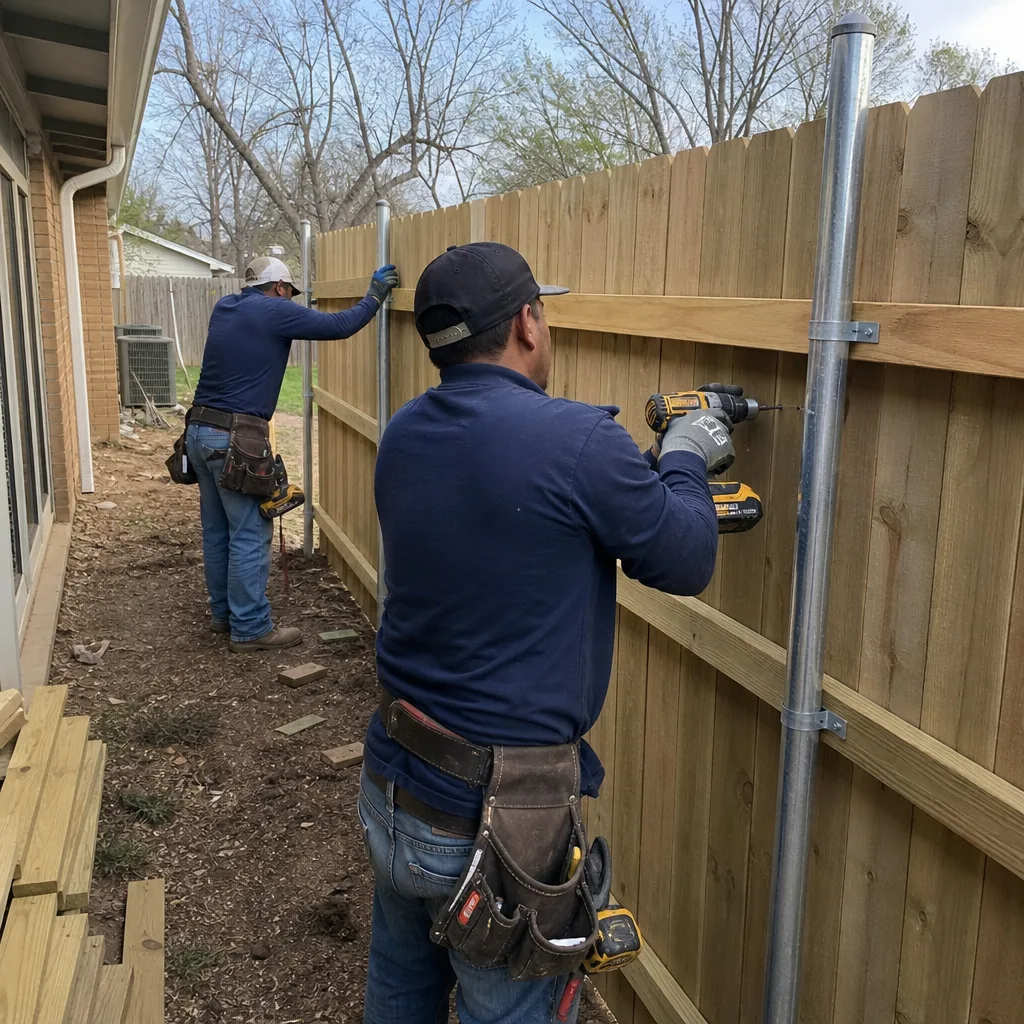
- Add fencing last. Fence posts set in clay near a paver edge can shift things if the groundwork hasn’t settled. Doing the fence installation after the hardscape gives you clean lines and no re-work.
- Save the finish details for the end. Landscaping, lighting, and any planting at the driveway edge close out the project.
One advantage of bundling these under a single contractor is that the sequencing decisions happen with one plan in hand. When driveway, walkway, drainage, and fence are bid separately, each trade is managing its own scope, and grade decisions at the boundaries get missed. When you’re planning the exterior as a package, the driveway becomes the anchor rather than an afterthought.
Think about the whole home
Homeowners planning an exterior refresh often end up looking at interior projects at the same time. That’s a natural moment to think about the whole scope: one plan for the driveway, the fence, the roof, and the rooms inside. If an addition or ADU is on the horizon, coordinating it with the exterior work avoids having to tear up a new driveway for delivery access or utility routing later. A driveway built to the right spec will last, and it’s worth protecting that investment by planning adjacent work up front.
What Does a Paver Driveway Cost in Garland?
Paver driveway costs in Garland generally fall somewhere in the range of $12 to $28 per square foot for a fully installed system, with the final number shaped by base depth, material choice, demolition, drainage, and access to the work area. A driveway in this market is a substantial investment, but the range is wide because the engineering under the surface varies so much from one property to the next.
| Line item | Typical cost range (installed) |
|---|---|
| Standard concrete pavers, deep base, no demo | $12 – $18 per sq ft |
| Premium concrete pavers (Belgard, Unilock, Techo-Bloc, Cambridge) | $16 – $24 per sq ft |
| Natural stone pavers | $22 – $35 per sq ft |
| Permeable paver system with engineered outlet | $20 – $32 per sq ft |
| Demo and haul-off of an existing driveway | $2 – $5 per sq ft |
| Drainage correction (channel drain, French drain, grade work) | Quoted per job |
Those ranges are estimates. The written estimate sets the final price, and it should itemize what’s included: base depth, fabric, edge restraint, demo, drainage, and any access considerations. When a quote comes in low, ask specifically what the base depth is and whether geotextile is included. Those two answers tell you most of what you need to know about whether the price is comparable.
For more on the service itself and how we approach it, see driveway & pavers.
How Long Does the Job Take?
A typical residential paver driveway in Garland takes somewhere from a few days to about a week of on-site work, with larger driveways, drainage corrections, or natural stone extending the timeline. The busy part is front-loaded: excavation, base prep, fabric, compaction, and grading take the bulk of the labor hours. Once the base passes inspection and the bedding layer is screened, the pavers go down relatively quickly.
What affects the schedule
- Demo of an existing surface. Tearing out and hauling away a slab or old asphalt adds a day or more.
- Base depth and drainage. Deeper excavation and drainage corrections take longer, and they should.
- Material lead time. Premium concrete paver lines and natural stone may need a delivery window, especially on custom colors.
- Weather. A particularly wet stretch in spring or late summer can slow excavation and base work. Dry conditions after compaction are actually ideal.
- Access. Tight driveways or lots with limited delivery access change how equipment and material get on site.
None of these are reasons to speed up the base stage. The base is where the money goes on a driveway that lasts. If a contractor is promising a paver driveway in a single day, that’s worth asking about – and likely a sign that compaction and drainage are being skipped.
Common Mistakes to Avoid
- Using a 4-inch base because a national guide said so. On Garland’s clay, 4 inches leaves the pavers taking the movement directly. Plan for 6 to 8 inches minimum, installed in compacted lifts.
- Skipping geotextile fabric to save a few hundred dollars. The money saved up front gets paid back later when the base loses structure and the pavers settle unevenly.
- Choosing pavers before you’ve resolved drainage. Slope and outlet decisions come first. A beautiful surface over bad drainage is a problem waiting to surface.
- Ignoring the HOA until the last minute. Pull the design guidelines and get written approval before you order material. It’s the cheapest step in the whole project.
- Picking the lowest bid without asking about base depth. A cheap quote that skips fabric and compaction is not a cheaper driveway, it’s a shorter one.
- Doing the fence and driveway in the wrong order. Fence posts set in clay near a fresh paver edge can move things. Do the fence after the hardscape base has settled.
- Forgetting the garage apron and transitions. The detail where the driveway meets the garage and the street is where water ends up. Plan it in the scope.
See the difference
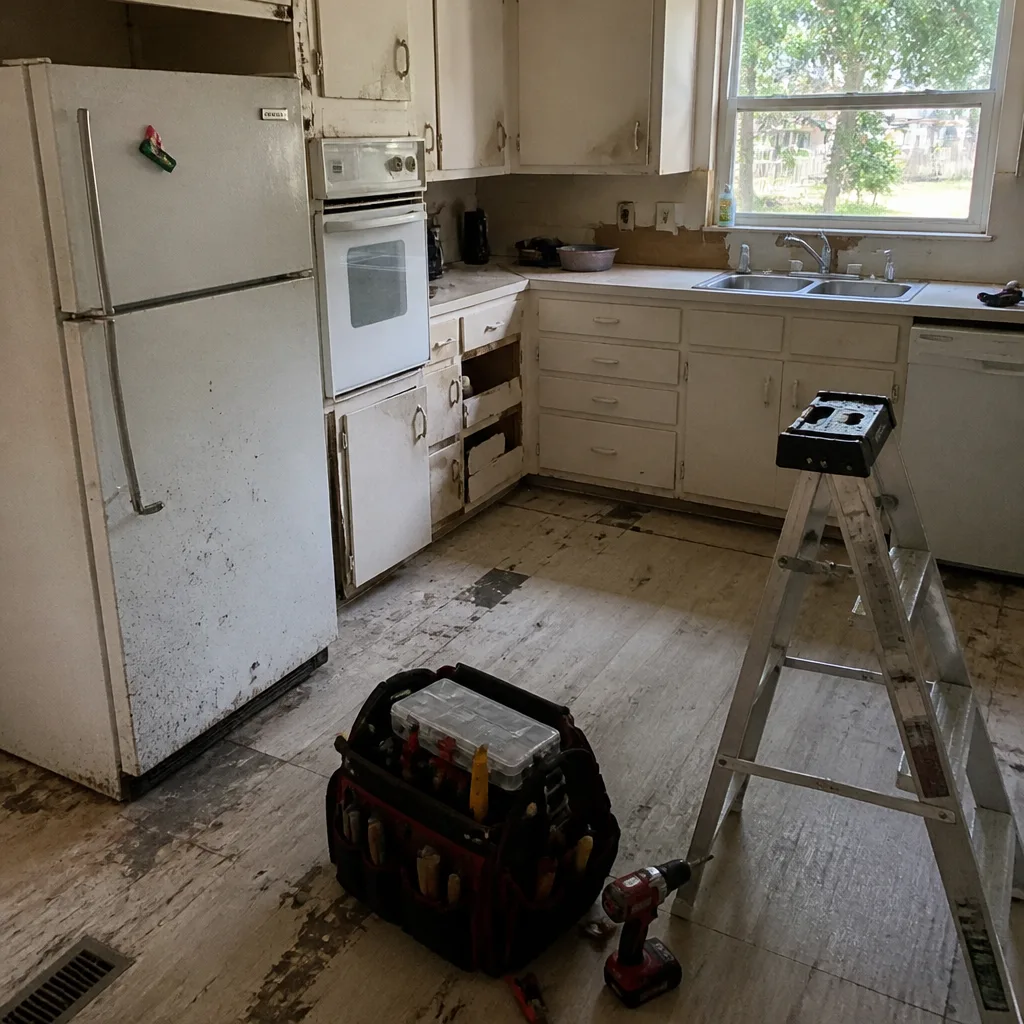 Before
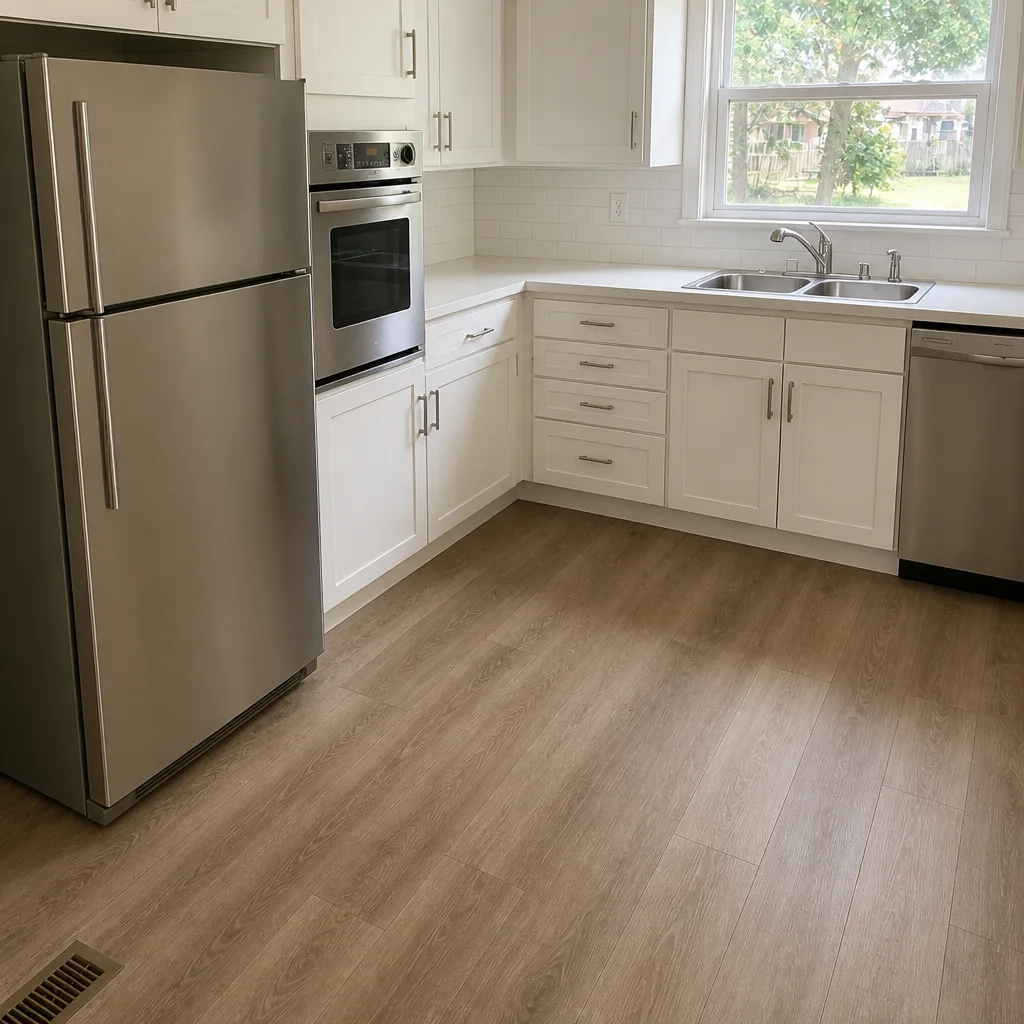 After
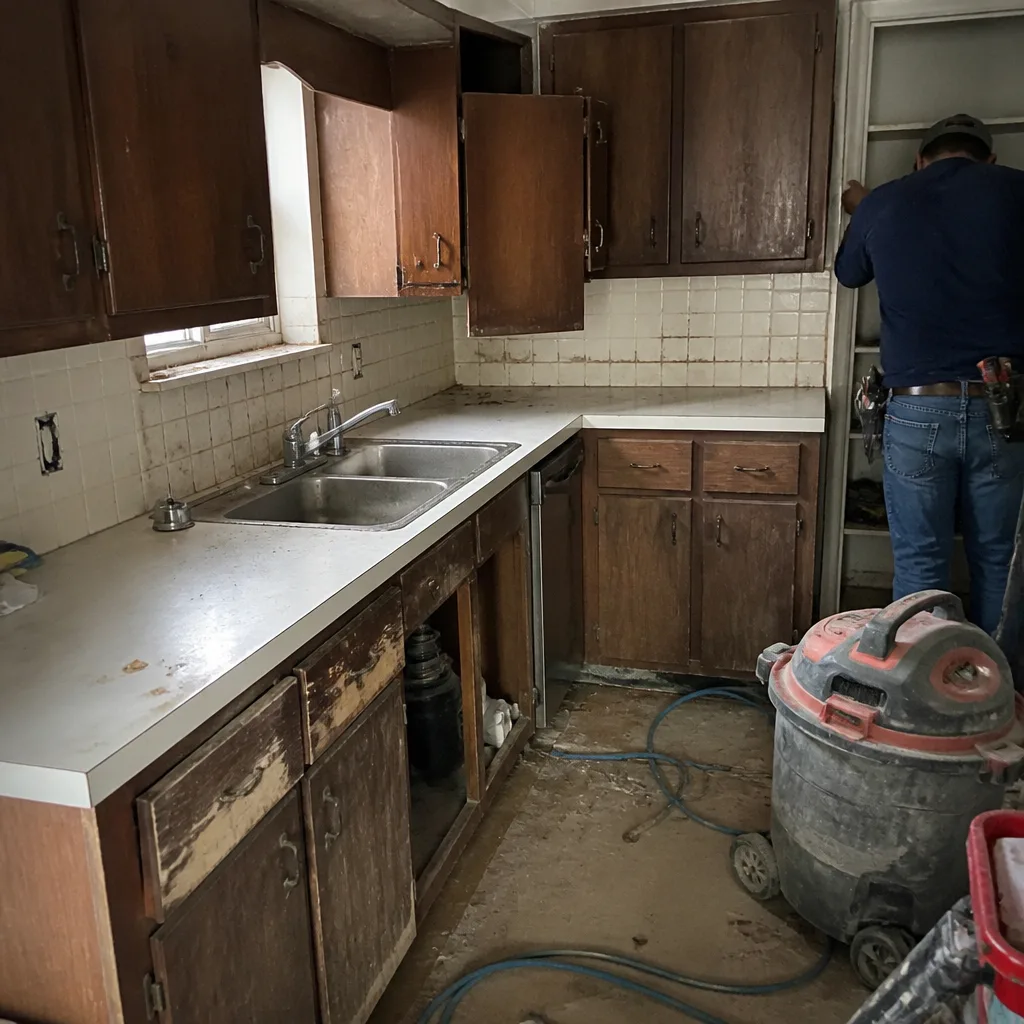 Before
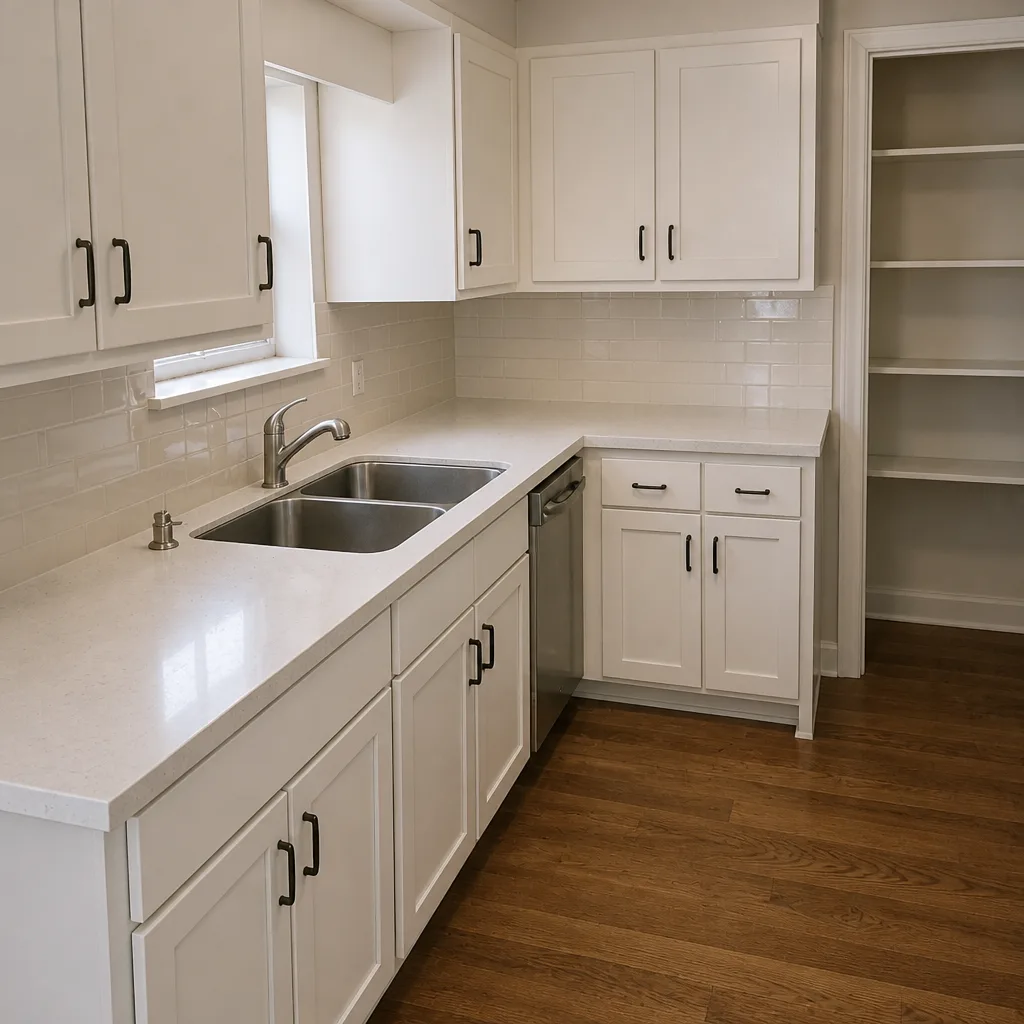 After
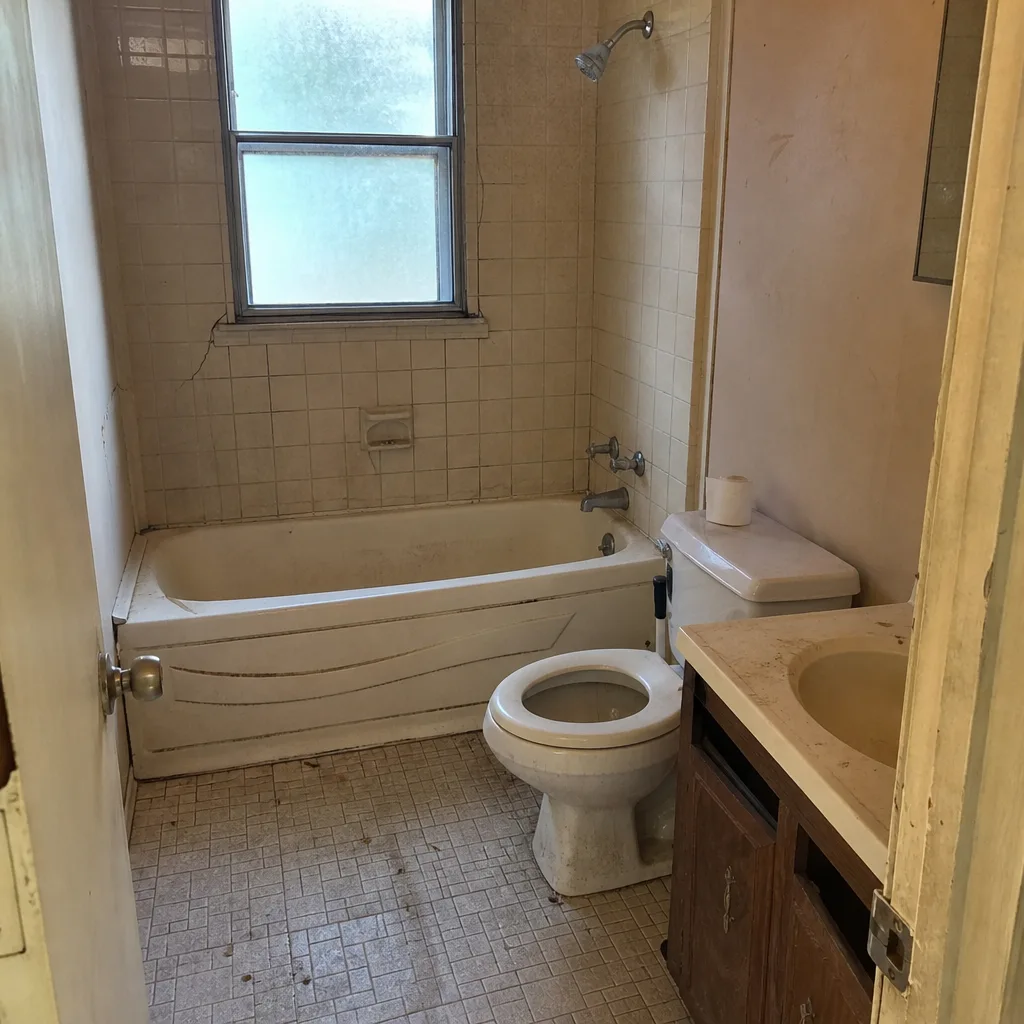 Before
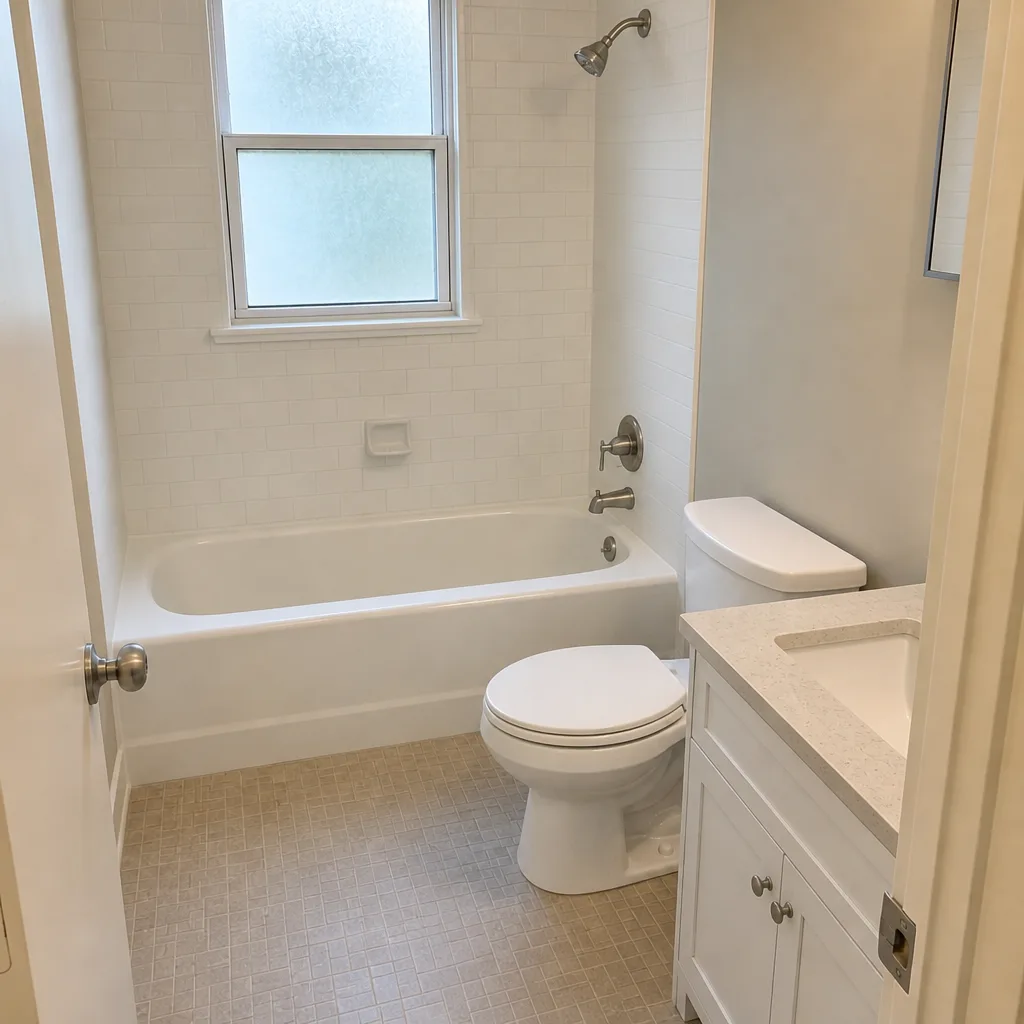 After
When to Call a Professional
Some paver issues are cosmetic and some are structural. If you’re seeing pavers that feel loose across a wide area, edges that are creeping outward, or water consistently pooling against the house or garage, that’s the point to bring in a professional. Those signs usually trace back to the base, and fixing the base means lifting pavers and redoing the groundwork – not a project to try as a weekend exercise. Same if you’re starting fresh with a driveway that will sit on clay. The design decisions about base depth, fabric, and drainage come before the surface choice, and they need to be made with the lot in front of you.
Construction Garland offers free estimates in Garland – call (888) 405-7616. We answer 24/7. Fast dispatch from 7am to 7pm, Sunday through Friday. Every estimate is written, itemized, and sets the price – no change orders mid-job, no surprise add-ons.
Frequently Asked Questions
At least 6 to 8 inches of compacted aggregate base for most residential driveways in Garland, driven by the expansive clay soil under most of the city. A 4-inch base is a common shortcut that leads to uneven settling. If you’re getting quotes, ask each contractor to state their base depth and compaction method in writing. Call (888) 405-7616 for a specific recommendation on your lot – estimates are free.
Interlocking pavers generally outperform poured concrete slabs on Garland’s expansive clay because they flex with minor ground movement instead of cracking. A paver driveway can also be repaired one section at a time, while a cracked slab usually needs a full pour. The paver advantage depends on the base being built correctly. Call (888) 405-7616 to talk through the comparison for your property.
A properly installed concrete paver driveway with a deep base and geotextile fabric can last for decades on clay, because the base is doing the work. When the base is shallow or fabric is skipped, pavers can start settling within a few years. The install quality determines the lifespan more than the paver brand. Call (888) 405-7616 and we’ll walk through what a correct install looks like for your site.
That depends on the scope of the work and how the driveway intersects the public right of way. Most cities require a permit for a new driveway approach to the street, so ask Garland’s building department directly before you start. A contractor who pulls permits and passes inspections as part of the job keeps you out of the middle of that process. Call (888) 405-7616 and we can walk you through what typically requires a permit and what doesn’t.
Usually yes, if the color, material, and pattern match the neighborhood’s design guidelines – earth tones and familiar patterns like herringbone or running bond clear most Garland-area reviews. Pull your HOA guidelines before you pick a paver so you’re choosing from an approved palette. Call (888) 405-7616 and we’ll discuss which product lines and colors are most likely to pass.
Start with drainage and grade, do the hardscape base and driveway next, then the walkways, then the fence – that order avoids re-work and keeps moisture moving away from the foundation. Bundling multiple exterior projects under one contractor keeps the sequencing coordinated. Call (888) 405-7616 and we’ll map out a plan for the whole exterior scope, including fence installation if that’s on the list.
The Bottom Line
A driveway in Garland is a long-term decision made on ground that moves. The paver surface you pick matters, but the base under it matters more: 6 to 8 inches of compacted aggregate, geotextile fabric as a separation layer, drainage designed before the first paver is set, and a plan that sequences the exterior as one project. Get those right and the surface will hold up through the wet springs and dry summers. Construction Garland handles the driveway and the exterior scope around it so the sequencing is planned in one place. If you’re ready to compare options for your Garland driveway, call (888) 405-7616. We answer 24/7. Fast dispatch from 7am to 7pm, Sunday through Friday. The estimate is free and written, and the written estimate sets the price.
Explore the full scope of what we do through Construction Garland, and if a new addition or home additions & ADU project is part of your plan, we can sequence it around the exterior work so the driveway isn’t disturbed twice.
Written by the team at Construction Garland.