
Last updated November 16, 2026
 Home additions & ADU
 Kitchen remodeling
 Bathroom remodeling
 Roofing
 Windows & doors
 Driveway & pavers
 Fence
Free written scope consultation - allowances, timeline, and change-order rules on paper before a single trade is scheduled
Construction Warning Signs: A Garland Homeowner’s Reference Guide
A diagonal crack above a door frame isn’t just cosmetic in a Garland home. In our experience across Garland, it’s often the first visible signal of differential foundation movement caused by soil moisture imbalance, and by the time it’s visible, the underlying cause has usually been active for one to two seasons. The warning signs homeowners search for most (cracks, stains, peeling paint) are the aesthetic ones. The signs that actually matter in Garland’s clay-soil environment are subtler, and they show up at the connections between systems, not on single surfaces. This guide walks through each of them as a progression, so you can tell seasonal movement from real distress and know which stage needs a professional.
Quick Answer
The warning signs that matter most on a Garland home are cracks that widen and don’t close, roofline sag or granule loss, water stains that appear inside but originate elsewhere, condensation that mimics a roof leak, and any defect a manufacturer can tie to delayed maintenance. Catching them early is cheaper than repairing the system they signal. When several signs appear together, get a licensed evaluation before you paint, patch, or re-roof over the cause.
Styles & brands we work with
- Kitchen remodeling
- Bathroom remodeling
- Home additions & ADU
- Roofing
- Windows & doors
- Driveway & pavers
- Fence
Table of Contents
- Foundation Warning Signs on Garland Clay Soil
- Roofing System Failure: Reading the Sequence, Not the Symptom
- Water Intrusion: Why the Source Isn’t Where the Stain Is
- Condensation That Looks Like a Roof Leak But Isn’t
- Warranty-Voiding Signs You Can’t Ignore
- How to Inspect Your Home in Six Steps
- When a Warning Sign Means Stop and Call
Foundation Warning Signs on Garland Clay Soil
Garland sits on expansive clay soil, and that one fact reshapes everything a homeowner should look for. Clay swells when it absorbs water and shrinks as it dries. A foundation on that soil will always move a little. The question isn’t whether it moves. It’s whether the movement is uniform (harmless seasonal cycling) or differential (one side of the slab heaving while the other settles). Differential movement is the one that cracks drywall, jams doors, and breaches brick veneer.
On slab-on-grade construction, which is what you’ll find across most of Garland, watch these:
- Diagonal cracks that widen over months. A hairline that stays hairline is a cosmetic annoyance. A diagonal crack above a door or window corner that visibly widens between seasons is a differential movement signal.
- Doors and windows that stick then free up. If a door jams for a stretch, then frees itself without you touching it, the slab is cycling. That’s worth documenting with dated photos.
- Floor slopes you notice, not measure. A subtle pitch toward one corner of the house, especially combined with a crack nearby, is more telling than a low spot that’s always been there.
- Brick step-cracks at the corners. Stair-step cracking in exterior brick veneer at a foundation corner usually tracks back to soil moisture on that side.
- Gaps at the slab edge. Daylight or a visible seam between the slab and a wall plate is a sign that the framing and foundation are parting company.
Garland summers are long and dry enough that foundation soil can lose a lot of moisture quickly, then recharge fast during fall rain. That swing is what drives the differential movement. The fix is often drainage and grading as much as structural. When you’re ready to address grading, gutters, or a full exterior refresh, our Construction Garland team can look at the full picture.
Roofing System Failure: Reading the Sequence, Not the Symptom
Roof problems almost never arrive as single, isolated defects. They follow a sequence. Granule loss comes first, flashing separation second, soft decking third. Knowing which stage you’re in tells you what action is urgent and what can wait.
- Stage one: granule loss. Granules shed from shingles and collect in gutters and at downspout splashouts. A few granules at first rain is normal. Steady accumulation across several downspouts means the shingle surface is aging faster than its structure. This stage is scheduled replacement, not emergency.
- Stage two: flashing separation. Flashing at chimneys, valleys, and wall transitions lifts. This is where water gets behind the shingle field without ever showing up as an obvious hole. Caught here, it’s a repair. Missed, it drives stage three.
- Stage three: decking soft spots. When a shingle is lifted or a flashing is open long enough, water reaches the wood sheathing. Soft spots, delamination at the fascia, and drips in the attic show up here. This stage is urgent: the roof is no longer the only thing to replace.
In Garland, the practical read is this: granule loss in the gutters is a warning, flashing separation is a stop-and-repair sign, and decking soft spots are a call-us-now sign. Roofing brands matter here too. Whether your home carries Owens Corning, IKO, Atlas, or Tamko shingles, the sequence is the same. Flashing detail is what separates a roof that lasts from one that fails early. When you’re ready to price a replacement or repair, our roofing work covers every stage of that sequence from inspection to install.
Water Intrusion: Why the Source Isn’t Where the Stain Is
A water stain in the corner of a bedroom is a symptom. The source of that stain is often 10 to 15 feet away, on the roof, the wall assembly, or at a window-seal joint that lets water in without a visible gap on the interior side. This is the single most common reason homeowners misdiagnose water problems in Garland homes: the water travels along framing and sheathing before it shows.
Here’s how to think about it:
- Stains in an interior corner often trace to a roof valley above, not to the wall in that corner.
- Stains along a wall-ceiling joint usually trace to wall flashing or a window-seal joint, not to a roof nail hole.
- Stains on a ceiling below an attic can trace to a source on the opposite side of the roof plane, because water rides the sheathing seam before it finds a low point.
This is why patching drywall or repainting over a stain rarely solves it. The stain returns at the next rain. The right response is to trace the water path from where it enters, not from where it shows. That means opening up the assembly or getting an inspection that reads the roof, flashing, and wall together. Our team at home additions & ADU projects includes this kind of assembly-level review whenever water intrusion has to be resolved before new work goes in.
If you’re weathering a water intrusion right now after a storm, call (888) 405-7616. We answer 24/7. Fast dispatch from 7am to 7pm, Sunday through Friday.
Condensation That Looks Like a Roof Leak But Isn’t
Not every water stain or drip is a roof leak. In a Garland home, a condensation problem from duct leakage or attic air sealing failure can masquerade as a roof leak, and the two need completely different fixes. Misdiagnosing one as the other means you pay for roofing work that won’t stop the moisture.
Telltale signs of condensation-related moisture:
- The drip or staining shows up in humid weather but doesn’t track a rain event.
- The ceiling stains are soft-edged and spread rather than concentrated at a leak point.
- You see condensation or frost on duct runs or at the air handler in the attic.
- Attic humidity is visibly higher than outdoor humidity at the same time.
Why this matters: a duct leak in the attic or missing attic air sealing pulls humid Garland air into a cooler space, and the moisture condenses on the cold sheathing. The moisture then appears on the interior ceiling like a roof defect. Real roof leaks track rain. Condensation doesn’t. If a stain has appeared during a dry, humid stretch, look at the ducts and attic before you look at the shingles.
Warranty-Voiding Signs You Can’t Ignore
Manufacturer warranties for roofing and window systems often include weather-event provisions: if a defect or damage is caused by a weather event, the homeowner typically has a set window to report it, and documented failures not addressed within that window can void coverage. That means the clock starts when the damage happens, not when you notice it.
Specific signs to document and act on:
- Missing or lifted shingles after a weather event. Photograph the damage and report it within the manufacturer’s stated window.
- Window seal failure. Fogging between panes, visible seal breakdown, or water intrusion at the frame. Document it with photos and the date.
- Flashing separation at wall or roof transitions. This is often the manufacturer’s basis for denying a later claim if it wasn’t repaired when discovered.
- Deferred maintenance on both. Missing shingles left in place and window seals left leaking both open the door to a claim denial even if the manufacturer’s own material was defective.
This is where reading the whole system, not single symptoms, saves money. Our team works with brands including Owens Corning and Tamko on roofing, and with window systems whose warranty terms depend on how fast install issues are caught. If you’re mid-project or need a documented inspection, get a free estimate by calling (888) 405-7616.
How to Inspect Your Home in Six Steps
A walk-around, a walk-through, and a look in the attic will catch most of the warning signs a Garland home is capable of showing. Do this before calling anyone, so you arrive at the conversation with specifics.
- Walk the exterior at ground level. Note cracks in brick or stucco, gaps at the slab edge, and any sunken spots along the foundation line. Take a photo of each.
- Walk the interior room by room. Look at door and window corners for diagonal cracks, at ceiling corners for stains, and at floors for pitches you can feel underfoot.
- Check every exterior door and window. Open and close them. Note any that stick, drag, or have lost their seal and show fogging between panes.
- Look up at the roof from the ground and in the attic. From the ground, look for lifted shingles, missing pieces, and flashing that’s pulled away. In the attic, look for water stains, soft decking under the field, and condensation on the sheathing.
- Check the gutters and splashouts. Granule accumulation at the splashout downstream of each gutter run tells you about shingle condition without climbing anything.
- Feel the air. Note whether attic and living space run humid indoors during dry outdoor stretches. That’s your condensation warning sign.
If any one item on this list shows a clear problem, get it evaluated. If several show up together, that’s a system-level issue. Call (888) 405-7616 for a free estimate.
When a Warning Sign Means Stop and Call
Most warning signs are scheduled for later. A few are not. These are the ones where you stop and call a licensed professional rather than wait or attempt a workaround:
- A diagonal crack that’s widening month over month. That’s differential foundation movement, not a drywall patch job.
- Soft decking or visible sag in a roofline. That’s structural roof failure in progress.
- Water intrusion during active rain. Active water coming through the assembly means a repair can’t wait for dry weather.
- Flashing separation with interior staining. Water is already behind the shingle field; don’t re-roof over it.
- A window seal failure that’s letting water past the frame. Water at the wall opening is a water path into the wall cavity.
The reason to stop rather than patch is straightforward. Every one of these signs is a system connection failing, and a cosmetic patch over a failing connection is money spent twice. Our technicians have up to 10 years of experience reading these progressions. When the sign is on our list, don’t cover it up. Get it evaluated.
Common Mistakes to Avoid
- Treating a diagonal crack as cosmetic. In Garland’s clay soil, a widening diagonal is a foundation movement signal, not a drywall flaw. Patch it and the crack returns, while the soil imbalance continues.
- Patching a ceiling stain without finding the source. A stain in a bedroom corner usually traces 10 to 15 feet away to a roof valley or sealing joint. Repainting first guarantees a second repair.
- Re-roofing over separated flashing. Flashing separation is a stop-and-repair stage. A new shingle field over open flashing just buries the leak in a new layer.
- Misreading condensation as a roof leak. A ceiling stain that appears in humid weather without a rain event points at ducts or attic air sealing, not shingles.
- Letting a weather-event claim window close. Roofing and window warranties often tie coverage to a reporting timeframe. Photograph and report damage when it happens, not the next time it rains.
- Ignoring a door that sticks then frees. A door that cycles on its own is a slab movement signal worth recording with dated photos, since a progression is what a professional needs to see.
- Letting one contractor patch, then a different one redo the work. When warning signs point at the connections between systems, one accountable team looking at the whole assembly saves time and prevents the patch-over-patch cycle.
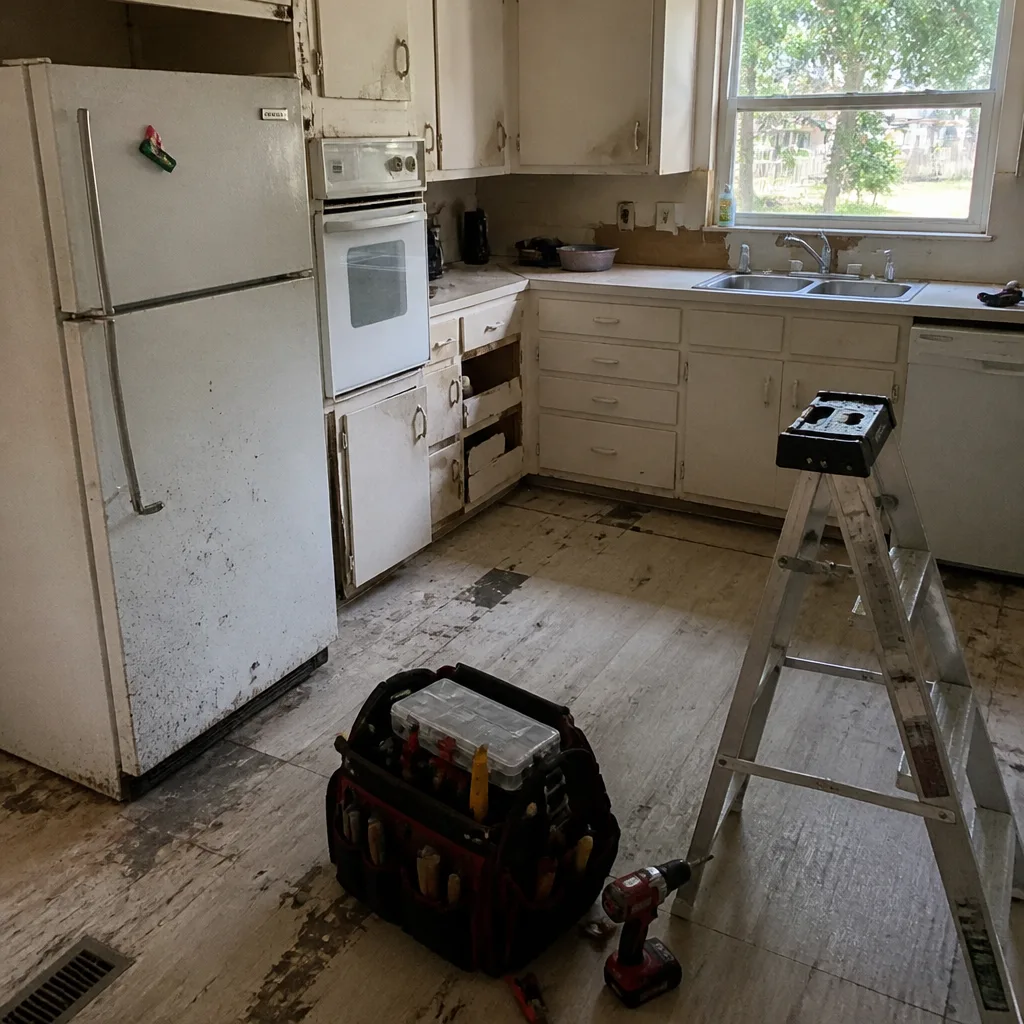
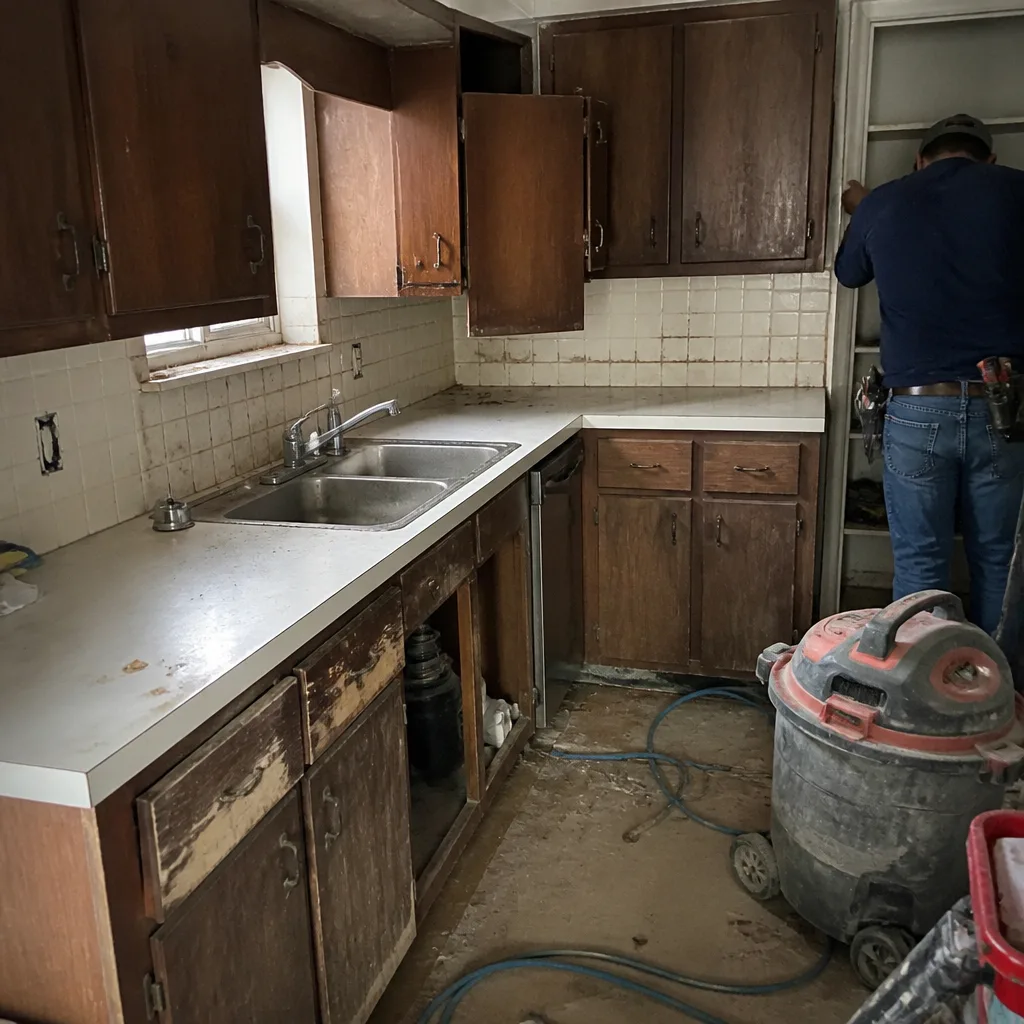
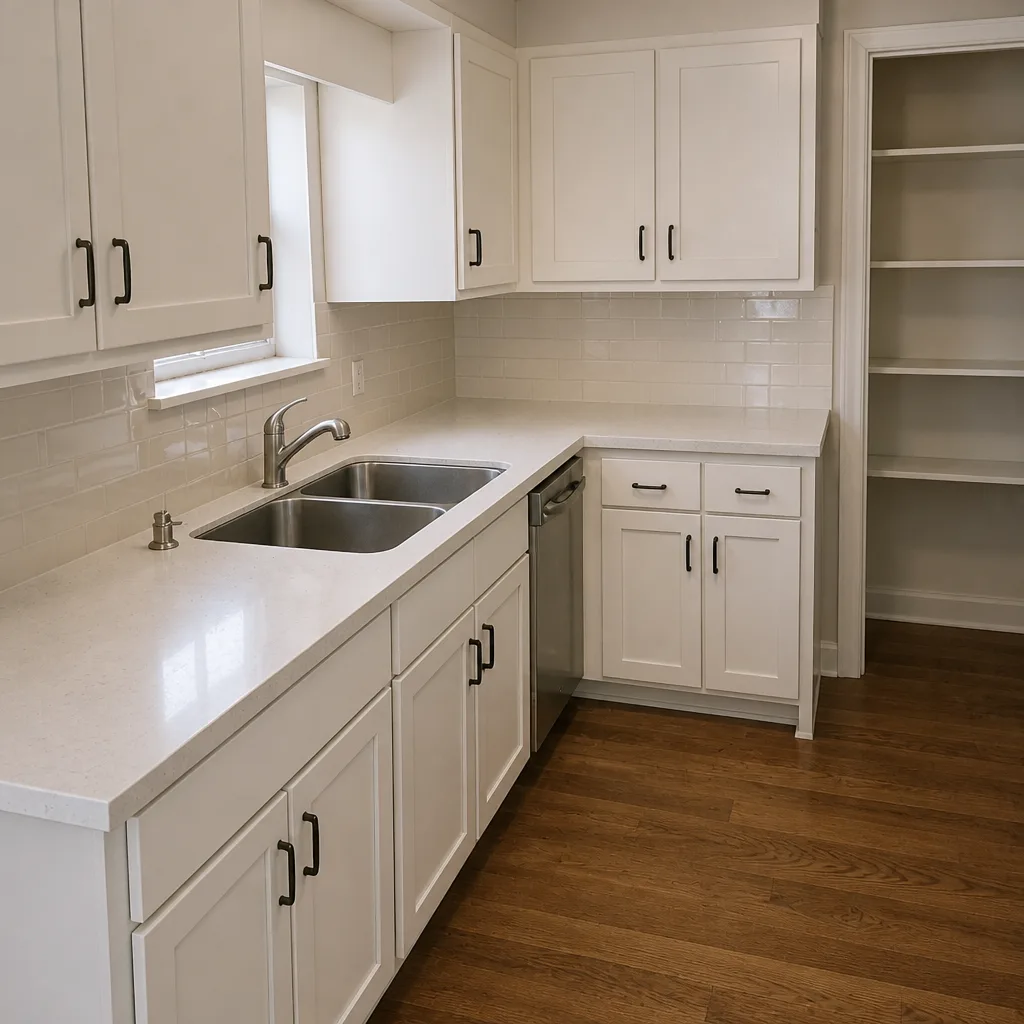
See the difference
 Before
 After
 Before
 After
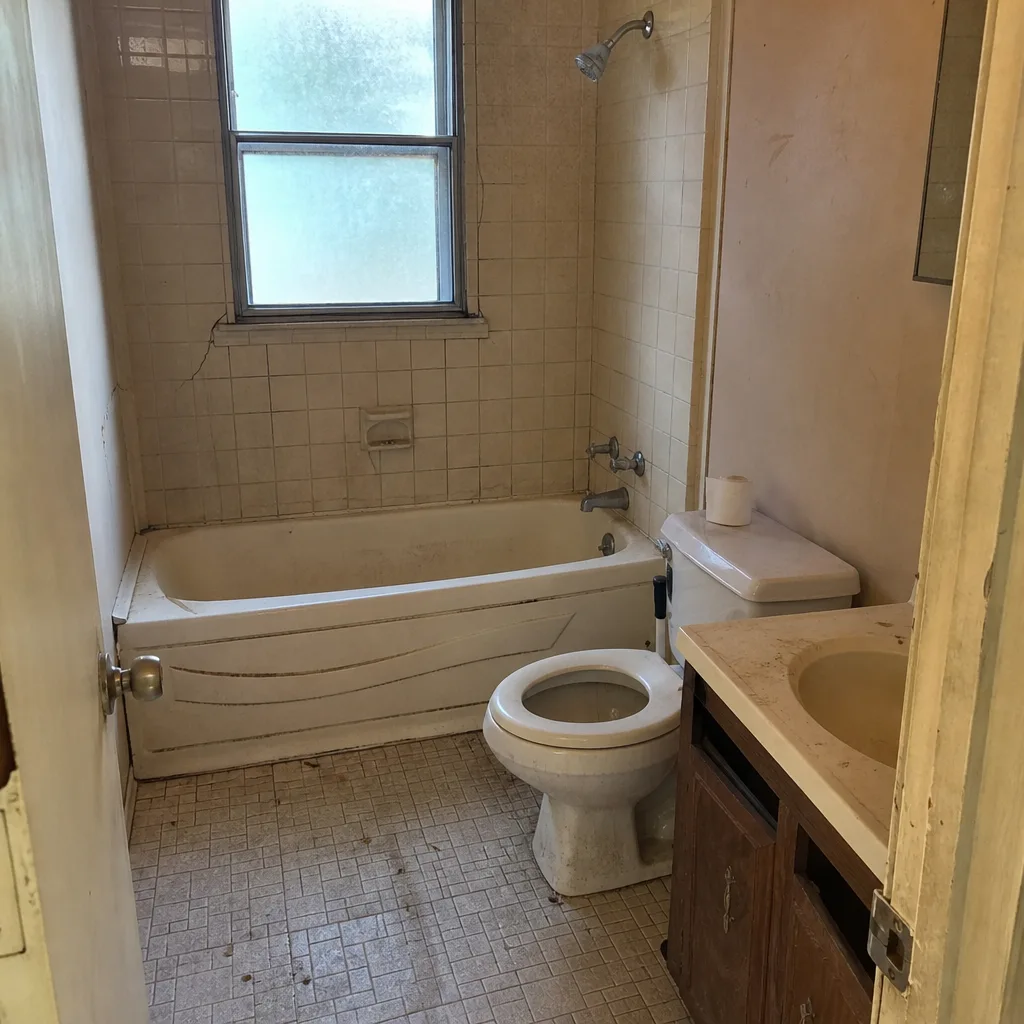 Before
 After
When to Call a Professional
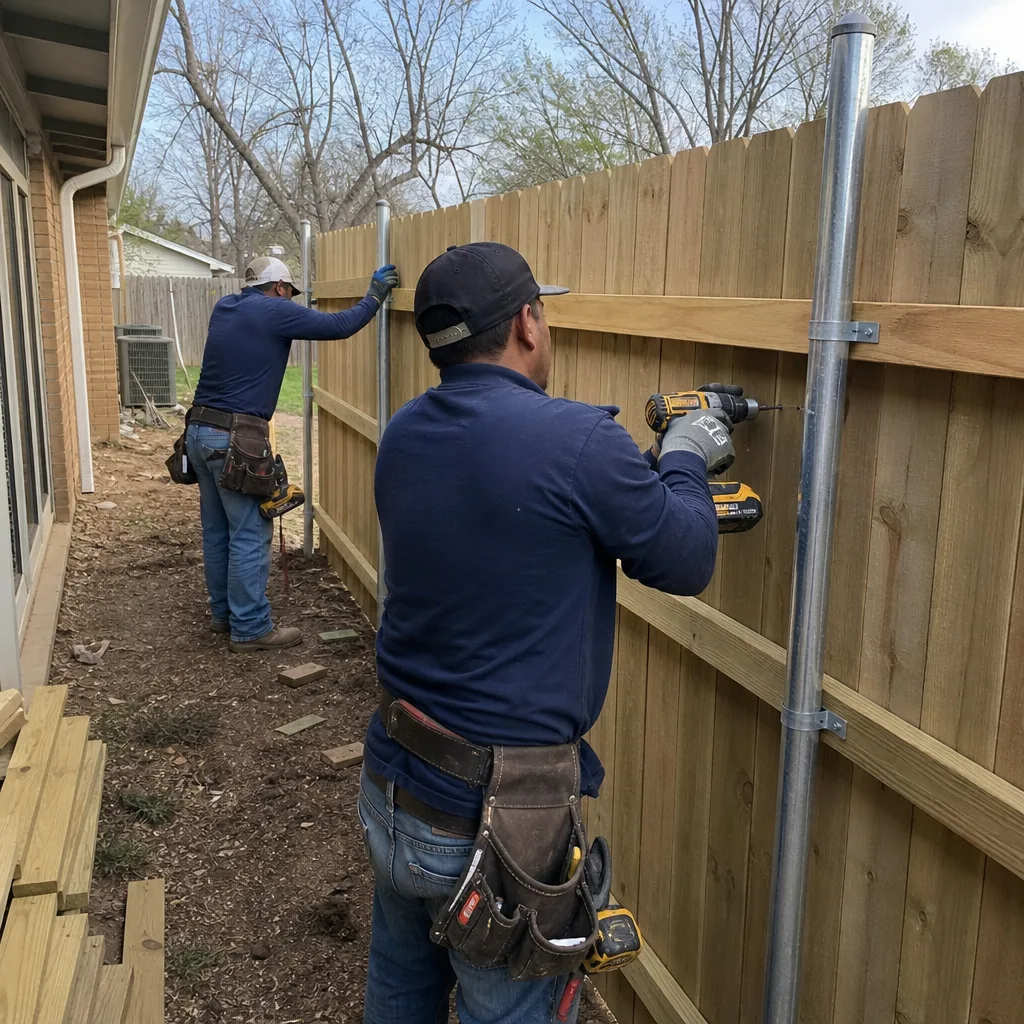
Call a professional when a sign has crossed from cosmetic to systemic. That means a diagonal crack that is widening, roofline sag, or soft decking in the attic. It also means any water intrusion that is active during rain or that’s appearing far from where the water likely enters. If two or more warning signs show up on the same side of the house or near the same roofline, that’s a system connection failing, and it’s time for a professional evaluation rather than more patching. Our team at fence installation along with our other exterior work sees these signs from the property line inward and often catches them before a homeowner does. Construction Garland offers free estimates in Garland. Call (888) 405-7616. We answer 24/7. Fast dispatch from 7am to 7pm, Sunday through Friday.
Frequently Asked Questions
A diagonal crack that widens over months, usually above a door or window corner, is the first reliable sign. It signals differential slab movement rather than normal seasonal cycling. Call (888) 405-7616 for a free estimate if you’re seeing one widen.
A seasonal crack stays hairline and cycles with moisture; a structural one widens and doesn’t close. Document yours with dated photos between seasons, since progression is what a professional needs to see. For an evaluation of your crack, call (888) 405-7616; estimates are free.
No, a few granules at first rain are normal. Steady accumulation across several downspouts means the shingle surface is aging faster than its structure, the first stage of a failure sequence. Call (888) 405-7616 to schedule an inspection of your shingle roof system.
Humidity-linked staining that doesn’t track rain is usually a condensation problem, typically from duct leakage or missing attic air sealing. It’s not a shingle defect, and the fix is in the attic, not on the roof. Call (888) 405-7616 for a free estimate on the diagnostic and repair.
Yes. Water travels along framing and sheathing, so the stain is often 10 to 15 feet from the actual entry point. The trace goes from the source, not the stain. Call (888) 405-7616 for a free estimate on tracing and repairing the intrusion.
Yes. Roofing and window warranties often include weather-event provisions with a reporting window, and deferred maintenance can void claim coverage. Photograph and report damage when it happens. Call (888) 405-7616 for a free estimate if you’re unsure about a claim.
The Bottom Line
In a Garland home, the warning signs that cost money are the connections between systems, not the single surfaces. A widening diagonal crack is a foundation movement signal. Granule loss, flashing separation, and soft decking are a sequence, not isolated events. A stain in a bedroom corner probably came from 10 to 15 feet away. Condensation that looks like a roof leak usually isn’t. And every sign on the warranty list has a clock attached. Read the progression, document what you see, and call a professional when the signs cluster. Patching over a failing connection is always money spent twice. Our technicians have up to 10 years of experience reading these signals.
When the signs add up, get a free estimate before the repair gets bigger: call (888) 405-7616. We answer 24/7. Fast dispatch from 7am to 7pm, Sunday through Friday.
Written by the team at Construction Garland.